

Lookup Tool for Volvo Parts Numbers
Volvo Part Number Lookup Tool for VIN Sourcing and Catalog Fitment
Locating exact component blueprints within our digital archive requires absolute mechanical tracking precision. Whether you are conducting routine filter upkeep on a high-efficiency Drive-E engine, executing a brake overhaul on a plug-in hybrid Recharge model, or restoring an all-wheel-drive crossover suspension, identifying components by general name alone introduces severe margin of error tracking.
Volvo vehicle architectures are engineered with strict Scandinavian factory tolerances, heavy-duty safety cages, and closely integrated electrical control modules. The master lookup catalog at EuroParts4Less connects directly into active factory parts databases, giving you immediate access to authentic component blueprints, design evolutions, and real-time warehouse inventory records.
Operating a precision-engineered vehicle under demanding daily driving conditions (such as handling intense seasonal temperature swings, enduring constant stop-and-go highway traffic, or managing heavy family utility) accelerates the natural wear cycle of delicate mechanical networks and sensory arrays.
Implementing a proactive vehicle care timeline backed entirely by factory-certified parts is the single most effective way to safeguard your automotive investment. This rigorous methodology ensures that your vehicle's structural integrity, emission safety ratings, and dynamic driving systems remain fully synchronized across long-term ownership up to the current 2026 model standards.
Two High-Precision Search Channels: Keyword Fields and VIN Tools
To handle whatever repair documentation, workshop invoices, or diagnostic records you have on hand, our digital catalog portal is constructed with a split entry layout. When visiting our lookup interface, you can route your inventory search through two dedicated processing pathways built to optimize component tracking and minimize logistics delays:
- Search By Part Number and Keywords: Located as the primary search block on the left side of our interface screen, this input field is ideal if you have a component sequence ready. It allows you to enter alphanumeric strings taken directly from a stamped factory casing, a mechanic's repair estimate, or a previous maintenance invoice to pull up real-time stock availability instantly.
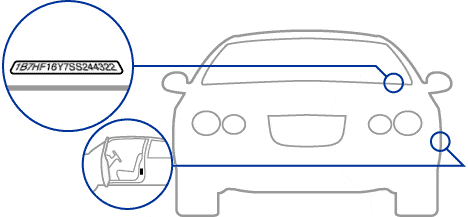
- Search By VIN (Vehicle Identification Number): Positioned on the right side of our lookup block, this system provides absolute validation. Entering your unique 17-character vehicle identification sequence completely handles your search parameters, analyzing factory option packages and specific build variations to isolate compatible components while hiding non-compatible items automatically.
Decoding the Standardized 8-Digit Volvo Component Numbering System
Volvo utilizes a clean, highly streamlined 8-digit numeric syntax to catalog every fastener, sensor, and mechanical assembly across its vehicle families.
Unlike other continental manufacturers who rely on complex, hyphenated systems or alphanumeric suffix modifiers, Volvo part numbers are continuous numeric strings (such as 31400234 or 32240123). Understanding how these sequences behave is crucial when tracking structural updates on your luxury vehicle:
Over a vehicle's life cycle, factory engineers continuously update metallurgy tolerances, modify internal electrical circuitry parameters, or refine chemical friction formulations to optimize vehicle safety and longevity.
When these design adjustments occur on the assembly line, the original part number sequence is officially retired and replaced by a newer, active engineering string. This process is known as part supersession.
If you enter an older part number stamped onto an original factory component into our keyword tool, the database automatically traces the active supersession chain. It instantly bridges the data gap to guide you directly to the currently approved, factory-authorized replacement part, ensuring you always receive the newest design updates available.
The Twin-Battery Fitment Trap and Advanced Electrical Sourcing
One of the most frequent cataloging errors made when shopping for genuine Volvo parts online involves the complex dual-battery configurations utilized on modern Scalable Product Architecture (SPA) and Compact Modular Architecture (CMA) models.
Most post-2016 models (including the XC90, XC60, S60, and V60) are factory-equipped with a secondary electrical layout to power active safety systems, infotainment frameworks, and the fuel-saving start-stop starter logic:
- The Main AGM Starter Battery: Typically housed deep within the rear luggage compartment well to optimize vehicle weight distribution. This heavy-duty, high-cold-cranking-amp (CCA) battery handles the primary engine starting load and acts as the foundational voltage stabilizer for the vehicle.
- The Secondary Auxiliary Support Battery: Tucked away inside the engine compartment cowl or hidden behind the front bumper fender lining. This smaller, specialized battery isolates and runs vital safety computing cards when the main engine starter cycles off at an intersection.
- Advanced 48V Mild Hybrid and PHEV Recharge Blocks: Mild-hybrid B5 and B6 powertrains, along with T8 plug-in hybrid variants, add complex 48-volt lithium-ion battery loops, isolated DC/DC converters, and specialized coolant cooling lines.
Attempting to replace an auxiliary electrical component or a starter system piece without checking your exact chassis parameters introduces significant procurement risks. Sourcing an incorrect replacement battery rating or a non-compliant terminal sensor can cause persistent dashboard fault alerts, lock out your start-stop operational cycles, or disable selectable drive modes entirely.
Chassis Topographies: Four-C Active Air Suspension vs. Composite Leaf Designs
The undercarriage layout of modern Volvo vehicles changes completely depending on your vehicle's factory package options. When overhauling your suspension, selecting replacement struts, shocks, control arms, or link assemblies requires explicit platform mapping:
Standard SPA vehicle configurations use a unique rear suspension design featuring a single transverse composite leaf spring running horizontally across the rear subframe instead of traditional coil springs. However, premium tiers or customized variants swap this setup out for the sophisticated Continuous Controlled Chassis Concept (Four-C) Active Air Suspension system.
The Four-C setup utilizes active air bellows struts driven by an on-board pneumatic compressor and linear solenoid valving actuators that adjust fluid pressures in milliseconds based on continuous road speed inputs.
Because these suspension topographies use completely separate frame mounting points, control arm geometries, and electrical harness connectors, mechanical and electronic shocks do not interchange.
Attempting to fit a standard base mechanical shock absorber onto a Four-C active suspension chassis will trigger immediate diagnostic trouble codes across your central vehicle stability computers, locking out your dynamic suspension profiles and disabling automated level management.
City Safety Telematics and Front-End Body Alignment Parameters
Restoring the exterior lines of your vehicle after low-speed parking impacts or highway road debris contact means looking beyond cosmetic sheet metal panels. Modern front-end elements (including grilles, bumper covers, and side mirrors) are directly tied into Volvo's legendary active safety suites, requiring absolute specification matching:
The upper windshield layout houses the advanced Active Safety Domain Master (ASDM) camera and radar module block, which controls autonomous emergency braking, lane-keeping assistance, and adaptive cruise control networks.
Replacing a damaged passenger compartment side mirror housing or front grille means checking your electronic pin allocations perfectly. Side mirrors on advanced trims house delicate surround-view cameras, blind-spot monitoring (BLIS) indicator radars, and auto-dimming power motors that rely on highly specific wire counts.
Sourcing a loose-tolerance aftermarket body shell can block or distort these telemetry fields, instantly turning on persistent dashboard trouble codes and disabling your crash-avoidance systems.
Bypass Sourcing Risks with Automated VIN Verification
Because Volvo frequently implements mid-cycle production splits or adjusts internal wiring layouts based on specific vehicle manufacturing plants (such as separating Sweden-built Torslanda models from Belgium-built Ghent builds or domestic South Carolina assemblies), broad catalog models are highly unreliable.
.To keep your repair project on schedule and eliminate unnecessary return shipping costs, always check your inventory choices using your unique 17-digit Vehicle Identification Number (VIN). Entering your VIN into our automated lookup utility parses your specific chassis blueprint down to its exact factory option codes and build sheet metadata.
The system automatically screens out non-compatible listings, verifying that your replacement filters, engine components, and body hardware deliver a perfect factory fit on the very first installation attempt.